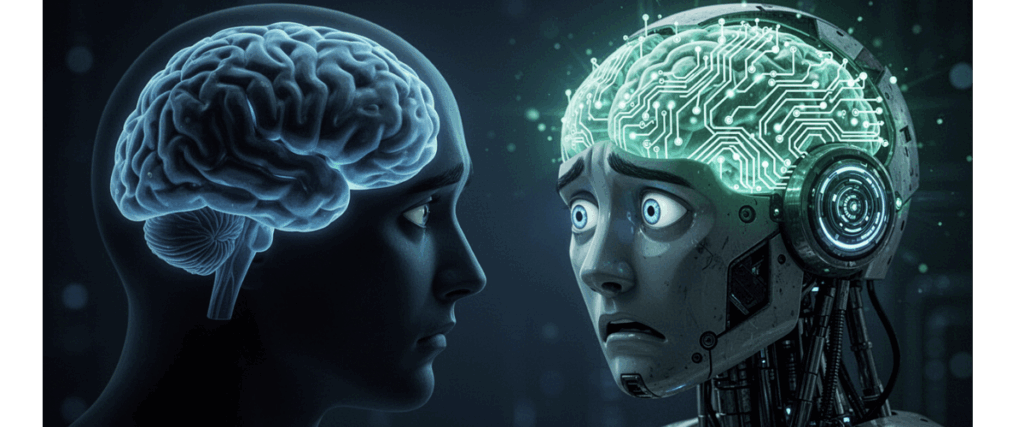
For a long time, many of us believed English class was secondary.
As the internet transformed the world and technology rapidly reshaped everyday life, the future began to look entirely digital. Schools pushed students toward STEM fields. Coding became the language of opportunity. Technical skills were treated as the clearest path to success in a modern economy increasingly driven by screens, software, and automation.
Science and math still felt important, but coding and computer networking were one-hundred-percent essential. It was an exhilarating time full of shiny promise. Compared to all of that, English class was an old-fashioned bore.
For many students, English class felt less like preparation for the future and more like academic drudgery: essays, grammar rules, vocabulary quizzes, and long novels written by people who had been dead for centuries. It was an obligation seemingly from tradition. We all asked the same questions:
“When am I ever going to use this?”
“Why do I need to know Homer wrote The Odyssey around 800 BC?”
“Wouldn’t this hour be better spent learning something practical?”
At the time, those were perfectly reasonable questions. After all, the digital future appeared to belong to engineers, programmers, and people who could build machines. And for a while, that seemed absolutely true.
The internet expanded. Smartphones arrived. Social media exploded. Nearly every industry became increasingly digital. Technology didn’t just influence the future, it became the future.
But something else happened along the way. As the world became more connected, communication became constant. Social media transformed nearly everyone into a publisher while simultaneously opening the floodgates to misinformation, outrage-driven content, emotional manipulation, and shallow thinking disguised as expertise. Information became endless while understanding became strangely rare. Attention spans fractured. Reading comprehension evaporated. People learned to skim headlines, react emotionally, and move on.
And then artificial intelligence arrived.
Suddenly, anyone could generate enormous amounts of content in seconds: articles, emails, social posts, marketing copy, essays, scripts, opinions, entire websites filled with information produced faster than any human being could reasonably read, process, or verify. Average content stopped being valuable because average content became infinite.
At the same time, the ability to communicate clearly, interpret meaning, evaluate arguments, detect manipulation, and think critically no longer felt like “soft skills.” They started looking like survival skills for the modern world.
Because the future will not belong solely to the people who can generate information. Machines can already do that at astonishing speed.
The future will belong to the people who can think clearly about information, interpret it thoughtfully, communicate it effectively, and understand the human beings behind it.
That is the work English teachers have been doing all along.
We Misunderstood English Class
English may have felt like it was all about grammar rules, vocabulary words, essay structure, and reading Charles Dickens while secretly wondering if any of it would matter once school ended. But those things were never meaningless academic exercises.
They were the pathway to two profoundly important human abilities: critical thinking and empathy.
Critical thinking develops when students learn to evaluate arguments, interpret meaning, identify weak reasoning, compare perspectives, and support ideas with evidence. A student analyzing the motivations of a character, questioning the reliability of a narrator, or defending an interpretation of a text is learning how to think carefully instead of simply accepting information at face value.
Empathy develops when students enter lives and perspectives far different from their own. Literature asks readers to understand fear, grief, ambition, loneliness, hope, regret, love, and conflict through the experiences of other people, even fictional ones. Students begin to recognize that human beings are complicated, flawed, emotional, contradictory, and shaped by circumstances they may not fully understand.
Those are not small lessons.
They are foundational human skills.
Because once people can think critically and understand others empathetically, they become far better at navigating the real world. They communicate more clearly. They interpret meaning more accurately. They lead more effectively. They collaborate more successfully. They become more thoughtful consumers of information and more thoughtful participants in society itself.
And in an age increasingly dominated by algorithms, automation, and artificial intelligence, those deeply human abilities may become more valuable than ever.
English class was never just about books. It was training in how to understand meaning through both intellect and empathy, the very foundation of human communication.
Reading Is Becoming a Superpower
America has a serious literacy problem.
Many students struggle not only with reading proficiency, but with sustaining attention, processing complex ideas, and interpreting meaning beneath the surface of language. Even among capable readers, another issue is emerging: the growing habit of consuming fragments of information instead of engaging deeply with ideas. Obviously, it’s the growing preference for speed over comprehension.
People scroll headlines, scan social posts, jump between tabs, skim summaries, and move rapidly through endless streams of information without slowing down long enough to fully process what they are reading. Of course, they recognize words, but often fail to analyze arguments, detect nuance, question assumptions, or consider deeper meaning.
That matters because modern life increasingly runs on written communication. The future belongs to people who can navigate it clearly and thoughtfully. And that requires far more than simply skimming words on a page.
Imagine a business trying to understand why prospective customers are hesitating to buy a product or service. The data might show a drop-off point, but the deeper answers often live in language: vague objections during sales calls, uncertainty buried in survey responses, subtle frustration hidden inside online reviews, or patterns buried within customer feedback.
Interpreting that ambiguity requires close reading. It requires the ability to detect tone, recognize nuance, identify contradictions, and understand what people mean, not merely what they literally say.
Those are English class skills. The student analyzing symbolism in a novel or interpreting a character’s hidden motivations is also learning how to navigate ambiguity in the real world. The student learning to follow a complex argument is also learning how to process information carefully in an age flooded with noise.
And in a world increasingly overwhelmed by content, the ability to read deeply and interpret meaning may become one of the greatest competitive advantages a person can possess.
AI Raises the Value of Human Skills
One of the great ironies of artificial intelligence is that as machines become more capable, distinctly human abilities become more valuable.
AI can already summarize articles, generate reports, imitate writing styles, answer questions, produce marketing copy, and create endless amounts of content in seconds. In many cases, it can do those things faster than people ever could.
But speed is not the same as wisdom, and information is not the same as understanding.
Artificial intelligence can generate words, but it cannot truly experience grief, ambition, loneliness, fear, hope, or love. It can imitate emotional language, but imitation is not the same as human understanding.
That distinction matters. Because the modern world is not suffering from a shortage of content. It is suffering from a shortage of meaning, clarity, judgment, and human-centric communication.
As average content becomes infinite, authentic human insight becomes more valuable. As automation expands, the ability to think critically, communicate clearly, empathize with others, and interpret complex situations becomes harder to replace.
Those are the very skills English teachers help students develop.
The student learning how to write persuasively is also learning leadership. The student learning how to analyze a character’s motivations is also learning emotional intelligence. The student learning how to support an argument with evidence is also learning how to think carefully in a world increasingly driven by reaction instead of reflection.
For years, society framed technical skills and human skills as opposites. The future may reveal that the people who thrive most are those capable of combining both.
Critical Thinking May Become the Most Important Skill of All
In this day and age, everyone must learn to think critically. Because if they don’t, someone else will gladly do their thinking for them.
About politics.
About culture.
About money.
About identity.
About truth itself.
It sounds dramatic until you consider that the algorithms decide what gets your attention. Social media platforms reward emotional reaction over careful reflection. Outrage spreads faster than nuance. Confidence, moral outrage, and hostility are mistaken for expertise.
A person sees a TikTok confidently making a claim. The video has dramatic music, quick edits, millions of views, and thousands of comments agreeing with it. For many people, that feels conclusive.
But likes are not proof.
English teachers train students to pause and ask deeper questions:
- Who created this?
- What evidence supports the claim?
- What assumptions are being made?
- What’s being left out?
- Is this emotionally persuasive or logically sound?
- Is confidence being mistaken for credibility?
That process is critical thinking.
And in a world increasingly shaped by algorithms, AI-generated content, emotional manipulation, and endless streams of information, critical thinking stops being merely academic.
It becomes a form of intellectual self-defense.
The student learning how to evaluate an argument in English class is also learning how to navigate the modern world without surrendering independent thought. The student learning how to compare interpretations of a text is also learning how to recognize complexity instead of blindly accepting the loudest opinion in the room.
Those are not outdated classroom skills. They are survival skills for the information age.
English Teachers Quietly Build Future Leaders
For years, leadership was often discussed in technical terms:
- expertise
- productivity
- execution
- efficiency
Those things still matter. But eventually, every leader runs into something far more complicated: people.
Employees need clarity. Customers need trust. Teams need direction. Organizations need vision. Conflicts need resolution. Ideas need persuasion. And none of those things happen without communication.
That is why so many leadership skills begin in English classrooms, even if students do not recognize it at the time.
When students learn to write clearly, they learn how to organize their thoughts. When they participate in discussions, they learn how to listen, respond, and articulate ideas under pressure. When they analyze stories, they learn how human beings behave, how motivation works, and how conflict shapes decisions.
Those lessons extend far beyond school. The future leaders of businesses, classrooms, hospitals, communities, and organizations will all need the ability to:
- communicate clearly
- persuade ethically
- interpret ambiguity
- understand people
- navigate disagreement
- connect ideas
- tell meaningful stories
In an age increasingly dominated by automation and artificial intelligence, these deeply human abilities may become some of the hardest skills to replace.
English teachers are not simply preparing students to pass tests or write essays. Quietly, they are helping prepare students to lead other human beings.
The Future Still Needs Human Beings
The future will always need engineers, scientists, programmers, and technical experts. Artificial intelligence will continue to transform industries, automate tasks, and reshape the way people work and communicate. But even in a highly technical world, human beings will still need to understand one another.
They will still need people who can:
- read carefully
- think critically
- communicate clearly
- interpret meaning
- evaluate arguments
- understand emotion
- navigate complexity
- tell stories that matter
Those abilities are not separate from the future. They are essential to it.
For years, many of us viewed English class as something old-fashioned, a requirement to complete before moving on to more “important” things. But the modern world is revealing something surprising: the skills developed in English classrooms may be some of the most important skills people carry into adult life.
Because technology changes quickly. Human nature does not. People still struggle with fear, ambition, loneliness, conflict, misunderstanding, persuasion, hope, and meaning. They still need leaders who can communicate clearly, writers who can interpret the world thoughtfully, and citizens capable of thinking for themselves.
Those skills are built every day in English classrooms. Which means English teachers may help shape the future more than we ever realized.